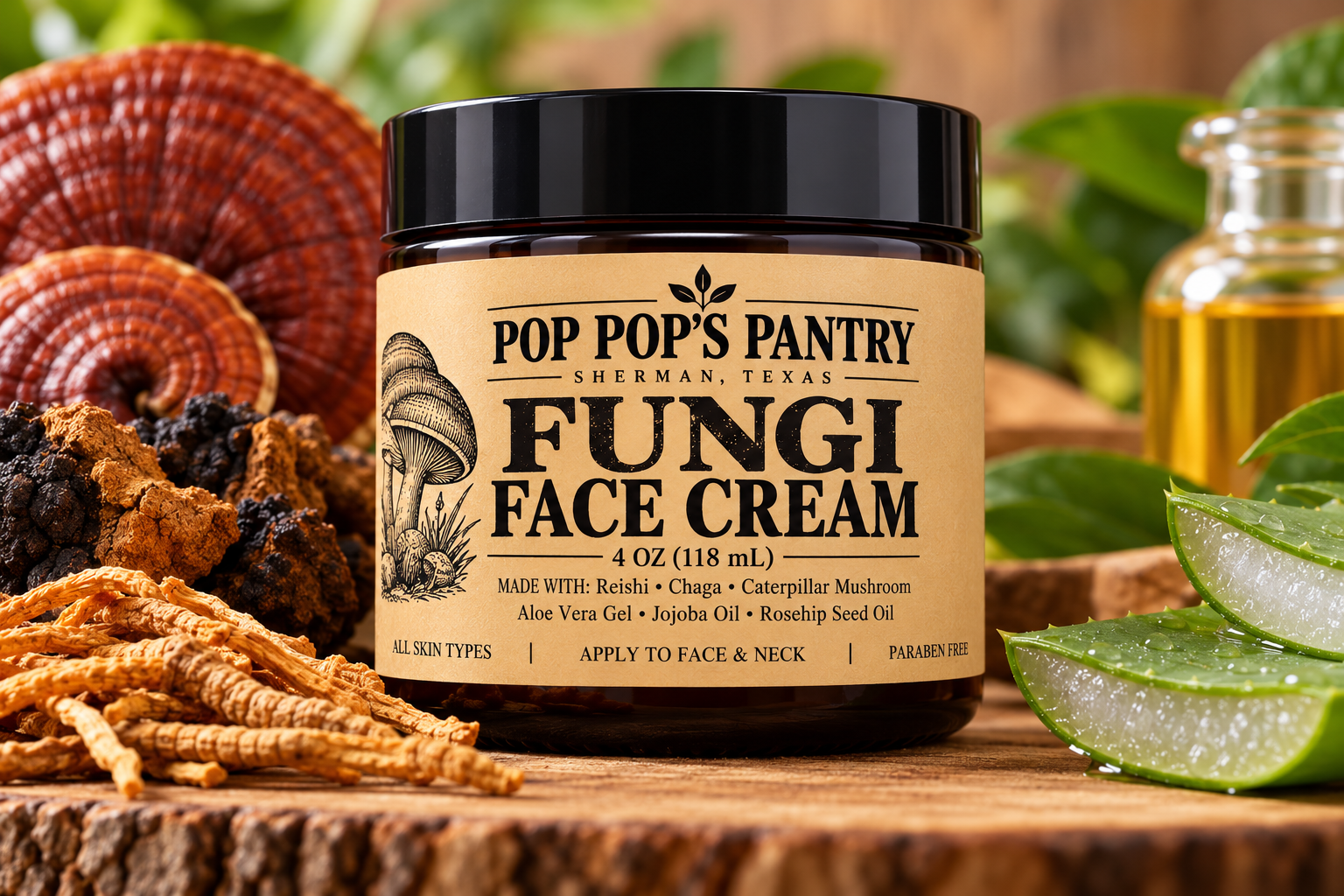
Researchers are studying compounds found in Cordyceps for their potential effects on cellular energy production, oxygen utilization, exercise performance, inflammation and immune function.
So what actually happens when Cordyceps extract enters the human body?
What Makes Cordyceps Special?
Two of the most interesting groups of compounds found in Cordyceps are cordycepin and polysaccharides, including beta-glucans.
Cordycepin is particularly interesting because its molecular structure is closely related to adenosine, an important molecule involved in cellular signaling and energy metabolism.
Cordyceps also contains other naturally occurring compounds, including sterols, amino acids, nucleosides and antioxidants.
Together, these compounds are being investigated for several biological effects.
Step 1: Cordyceps Enters the Digestive System
When Cordyceps extract is consumed, its compounds enter the gastrointestinal tract.
Smaller compounds can be absorbed, while larger polysaccharides interact with the intestinal environment and immune system.
This is one reason an extract is different from simply eating powdered mushroom material.
Extraction helps release compounds from the mushroom's tough cellular structure and makes certain components more accessible.
Step 2: Cordyceps May Influence Cellular Energy
This is where Cordyceps gets especially interesting.
Every cell in your body needs energy.
Much of that usable energy is supplied by a molecule called ATP, or adenosine triphosphate.
Think of ATP as the body's cellular energy currency.
Your muscles need ATP to contract. Your heart needs it to beat. Your brain needs enormous amounts of cellular energy simply to maintain normal activity.
Laboratory research has found that Cordyceps militaris extracts can influence pathways associated with ATP production.
This has led researchers to investigate whether Cordyceps supplementation could help support energy production and physical performance.
It doesn't mean Cordyceps simply pours ATP into your bloodstream. Biology, inconveniently, refuses to be that simple.
Instead, compounds within Cordyceps may influence some of the metabolic pathways involved in how cells produce and use energy.
Step 3: Oxygen and Exercise Performance
Producing energy efficiently during exercise depends heavily on oxygen.
When you walk, work, exercise or perform other sustained physical activities, oxygen helps your mitochondria produce ATP.
This has made oxygen utilization and aerobic performance major areas of Cordyceps research.
Some human studies involving Cordyceps-containing supplements have reported improvements in measurements such as:
Oxygen uptake
Time to exhaustion
Exercise tolerance
Ventilatory threshold
Aerobic performance
However, the results haven't been consistent across every study.
Current research suggests Cordyceps may have potential for supporting exercise performance, particularly with continued supplementation, but scientists still need larger and better-controlled human studies.
Step 4: The Mitochondria Connection
Inside most of your cells are tiny structures called mitochondria.
They're often described as the powerhouses of the cell because they're responsible for producing much of the ATP your body uses.
Researchers are studying whether Cordyceps compounds influence metabolic pathways connected with mitochondrial energy production.
This is particularly interesting for muscles.
During sustained activity, muscle cells have enormous energy requirements. Anything that influences mitochondrial metabolism could potentially affect how efficiently those muscles respond to physical demands.
Much of the detailed evidence concerning these mechanisms still comes from laboratory and animal research, so scientists are continuing to investigate whether the same effects occur to a meaningful degree in humans.
Step 5: Cordyceps and Fatigue
Cordyceps is frequently marketed as an "energy mushroom," but that's an oversimplification.
Cordyceps isn't caffeine.
It doesn't necessarily create energy by stimulating the nervous system.
Instead, researchers are investigating whether its effects on cellular metabolism and oxygen utilization could influence the body's ability to sustain physical activity.
Some human studies have found improvements in exercise endurance or time to exhaustion, while others have found little or no significant improvement.
That makes supporting cellular energy and exercise capacity a more scientifically responsible description than claiming Cordyceps eliminates fatigue.
Step 6: Cordyceps and the Immune System
Energy isn't the only reason researchers are interested in Cordyceps.
Cordyceps polysaccharides and other compounds have also demonstrated immunomodulatory activity in laboratory research.
Immune cells communicate through chemical messengers called cytokines. Research suggests compounds from Cordyceps can interact with pathways involving immune cells such as:
Macrophages
Natural killer (NK) cells
T cells
Other lymphocytes
As with Turkey Tail, saying Cordyceps simply "boosts the immune system" doesn't accurately describe what's happening.
A better term is immune modulation, meaning certain compounds may influence how different components of the immune system communicate and respond.
Step 7: Cordycepin
One of the compounds that makes Cordyceps particularly unusual is cordycepin, also known as 3'-deoxyadenosine.
Its chemical structure resembles adenosine, an important molecule involved in numerous biological processes.
Researchers have investigated cordycepin for potential effects involving:
Cellular signaling
Energy metabolism
Inflammatory pathways
Immune responses
Platelet activity
Most of the detailed research into these mechanisms has been performed in cells or animals rather than large human clinical trials.
That's important because something that produces an interesting result in a laboratory doesn't automatically produce the same effect inside the human body.
Why Use Cordyceps Extract?
Mushroom cell walls contain chitin, a tough structural material that's difficult for humans to digest completely.
Extraction helps break open the mushroom material and pull out soluble compounds.
Depending on the extraction process, this can include polysaccharides, beta-glucans, nucleosides and other mushroom compounds.
That's why there's an important difference between whole mushroom powder and mushroom extract.
The species of Cordyceps, growing conditions, fruiting body versus mycelium, extraction method and concentration of active compounds can all influence the final product.
What Does Human Research Actually Show?
Cordyceps is promising, but the science deserves some perspective.
Human studies have investigated Cordyceps for exercise performance, oxygen utilization and other physiological effects. Some studies have reported improvements, while others have produced limited or inconsistent results.
Recent scientific reviews have concluded that Cordyceps shows potential for exercise performance, but the available human studies remain relatively small and use different Cordyceps species, preparations and dosages.
That makes it difficult to assume every Cordyceps extract will produce the same results.
This is one reason it's important to distinguish between promising biological mechanisms and clinically proven health effects.
The Bottom Line
Cordyceps is one of the most fascinating functional mushrooms because researchers aren't investigating just one pathway.
Its compounds appear capable of interacting with several biological systems involving:
Cellular energy → ATP production → oxygen utilization → physical performance → immune signaling
The strongest story behind Cordyceps isn't that it acts like a stimulant.
It's that researchers are investigating whether Cordyceps compounds can influence the way the body produces energy, uses oxygen and responds to physical demands.
And that makes Cordyceps a remarkably interesting mushroom for anyone interested in how fungi interact with human biology.
Pop Pops Pantry
This article is provided for educational purposes only and is not intended to diagnose, treat, cure or prevent any disease. Research into Cordyceps and its compounds is ongoing, and mushroom products should not be used as a substitute for medical care or prescribed treatment. People taking blood-thinning or blood-sugar-lowering medications should discuss Cordyceps supplements with their healthcare provider.